WEAVING (CYBER)
FEMINISM
This website explores the connections between cyberfeminism, textiles, and computation. It highlights how practices like weaving and embroidery have influenced coding and algorithmic thinking, showing the historical and contemporary ways feminized craft labor intersects with technology.
The Jacquard loom made it possible to produce complex and detailed patterns to be manufactured by unskilled workers in a fraction of the time it took a master weaver and his assistant working manually. In the loom there are punch cards which control which warp threads should be raised to allow the weft thread to pass under them. With these punch cards, Jacquard looms could quickly reproduce any pattern a designer could think up, and replicate it again and again. Jacquard's invention transformed patterned cloth production, but it also represented a revolution in human-machine interaction in its use of binary code. Using either a punched hole or no punched hole to instruct a machine (the loom) to carry out an automated process (weaving).

The Jacquard loom showed that complex patterns could be controlled automatically using punch cards. This system demonstrated that a machine could follow coded instructions to perform a precise task. Inspired by this idea, Charles Babbage designed the Analytical Engine in 1837. Instead of weaving patterns, his machine was meant to perform calculations. It would use punch cards, similar to those of the Jacquard loom, to control mathematical operations automatically.

Ada Lovelace worked closely with Babbage and wrote detailed notes about the machine in 1843. In these notes, she described what is now recognized as the first computer algorithm. She also understood that the machine could do more than calculate numbers. It could potentially process symbols, music, or language. For this reason, she is often regarded as the first computer programmer.

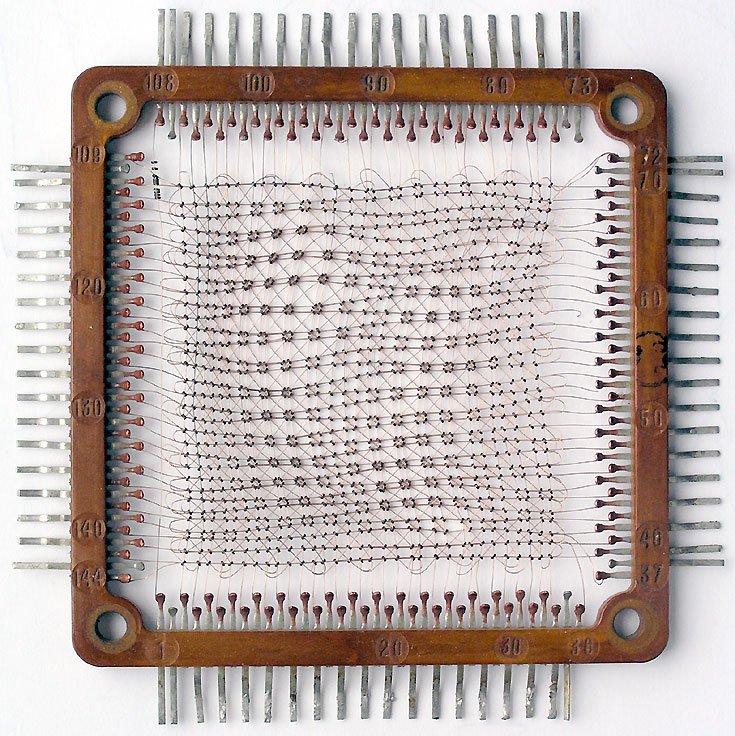
Core rope memory was an early form of computer memory used in the 1960s, especially in the Apollo spacecraft. It stored information physically: tiny magnetic cores were threaded with wires, and whether a wire passed through or around a core represented a 1 or a 0. This ,,weaving” of wires encoded programs directly into the hardware. Because the memory was literally woven by hand, it required highly skilled workers, usually women, to assemble it. Core rope memory was ideal for critical applications like guiding the Apollo missions to the Moon.

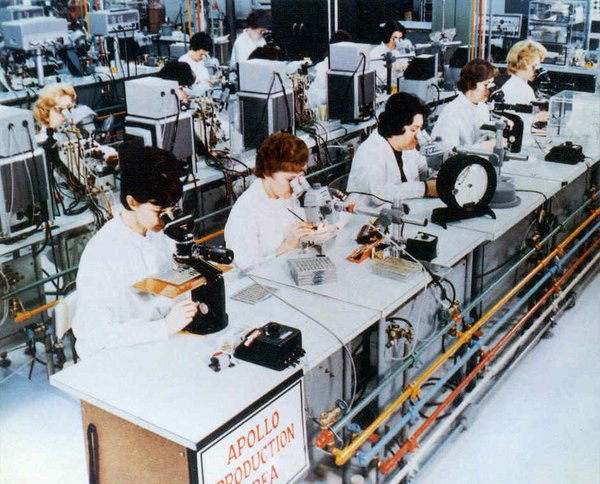
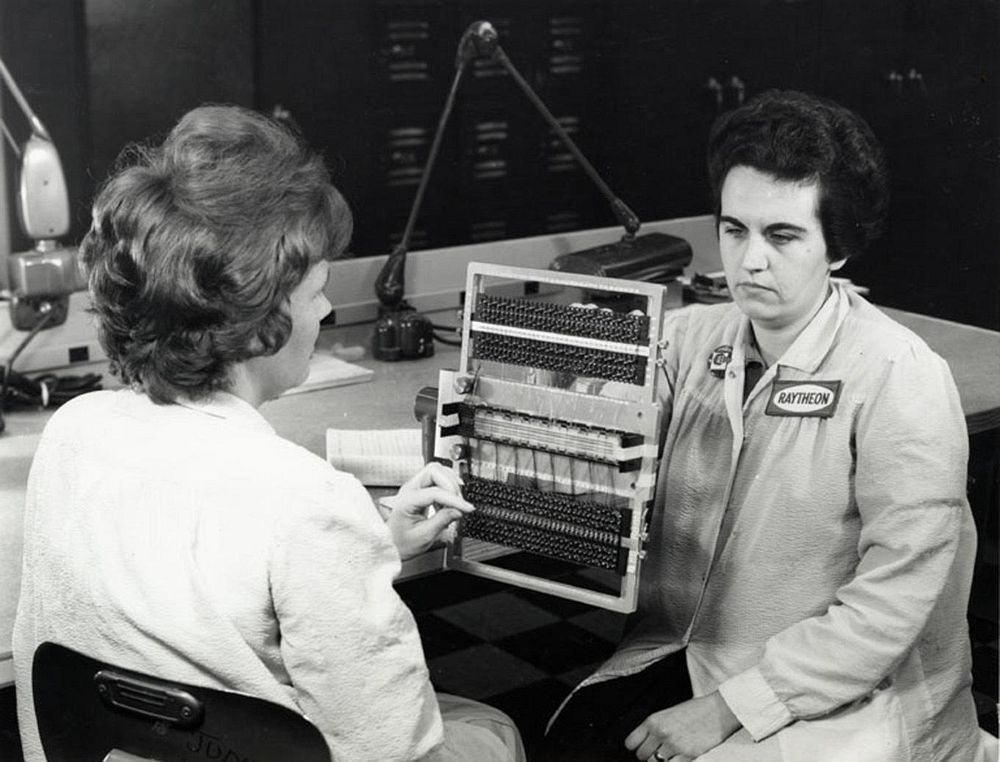
Margaret Hamilton was an American computer scientist and systems engineer who led the team that developed the onboard software for the Apollo missions in the 1960’s. Her work was crucial for the success of Apollo 11. Much of this software relied on core rope memory, which was physically woven by workers often referred to as the ,,Little Old Ladies”. They carefully threaded the wires to encode the programs that guided the spacecraft.
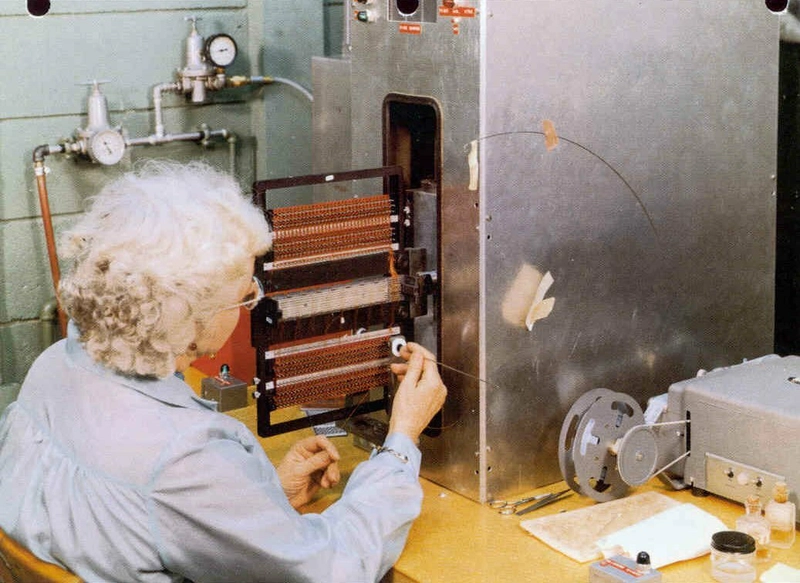
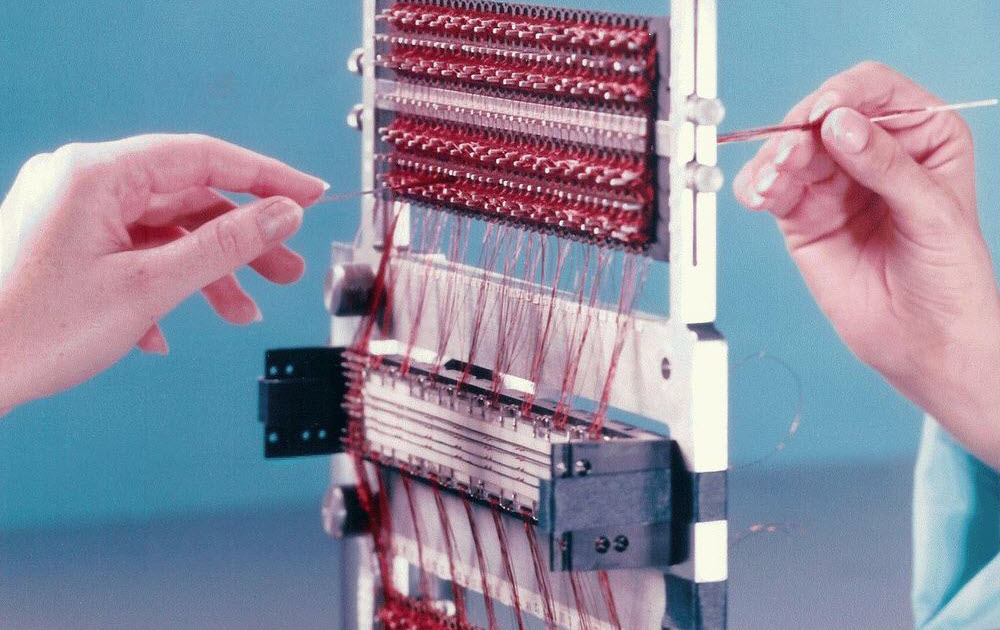
The Little Old Ladies were highly skilled women who hand-wove the Apollo spacecraft’s core rope memory. Using a specialized loom, they threaded individual wires through tiny magnetic rings to encode the program. Threading a wire through a ring represented a 1, while skipping a ring represented a 0. These magnetic rings changed the voltage of the current running through the wires, so the machine could “read” the program: a voltage change meant a 1, and no change meant a 0. The programs were woven into long, rope-like bundles of electrical pathways, forming extremely complex patterns. Because even a single mistake could be disastrous, only women with exceptional attention to detail were trusted to do this work. If an error occurred, the entire core rope had to be unwoven and started again. Core rope memory was sometimes nicknamed LOL memory, short for “Little Old Lady” memory.


The Cyborg Manifesto is an essay by Donna Haraway written in 1985. It uses the idea of a ,,cyborg”, part human, part machine, to show how technology can challenge traditional ideas about gender, identity, and society. Haraway’s work inspired cyberfeminism, encouraging people to think about how machines and digital networks can change the way we live and relate to each other.
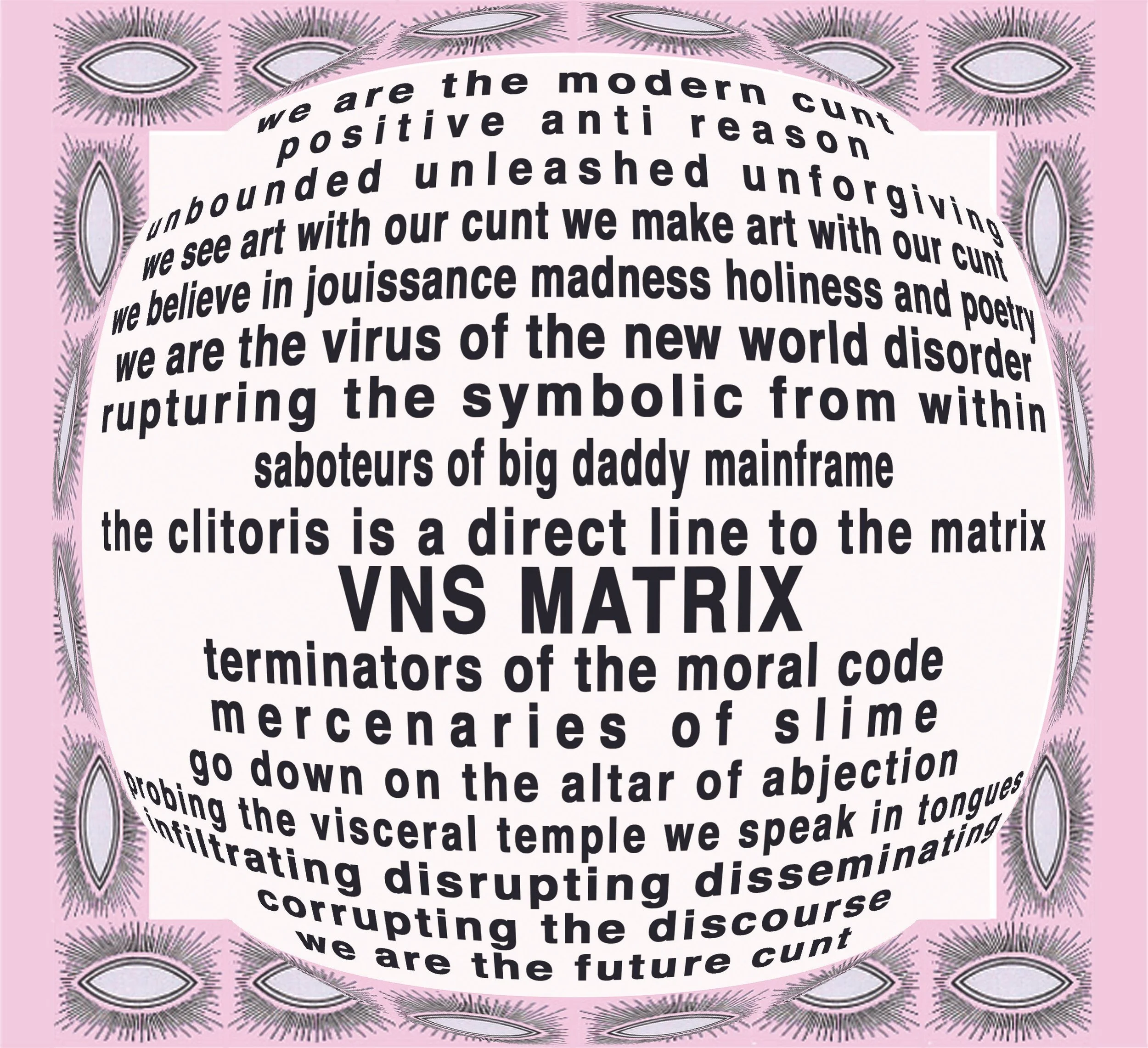
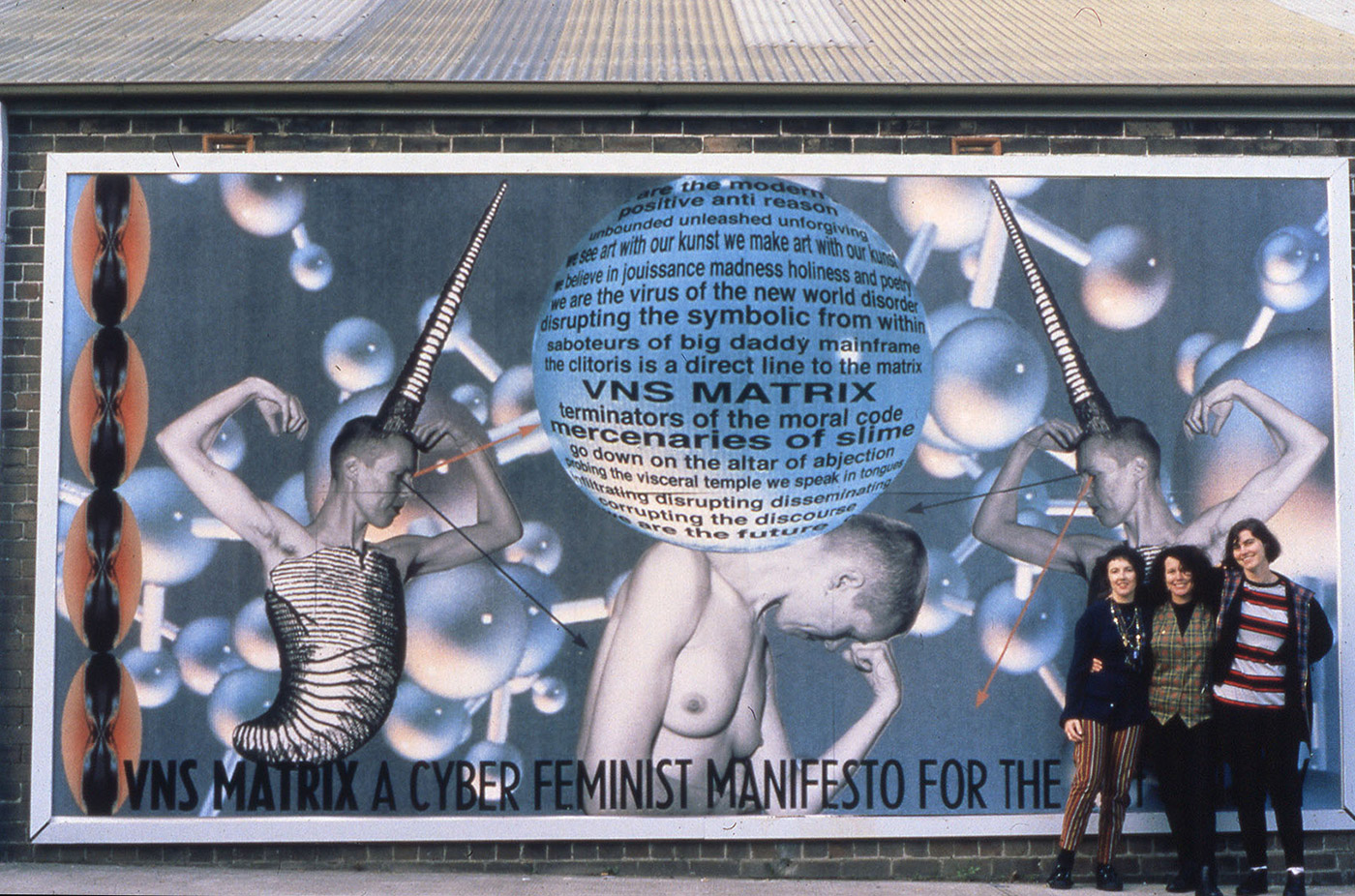
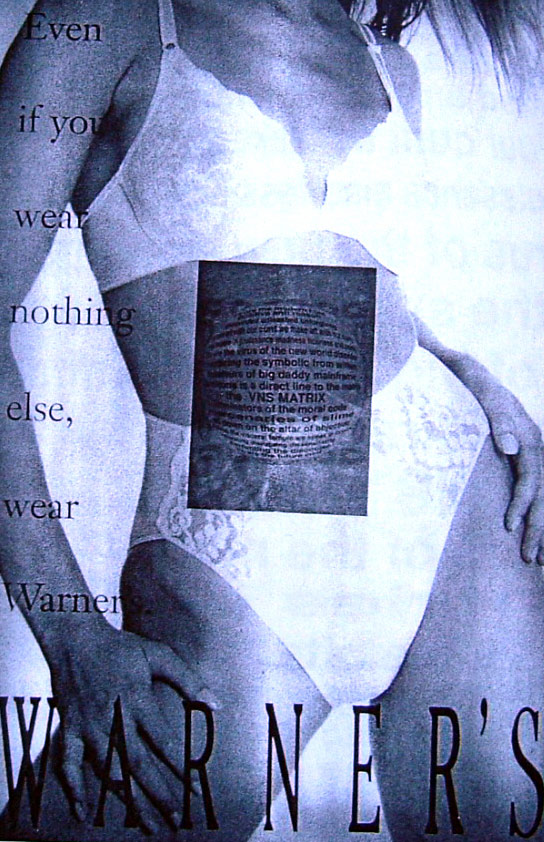
The Cyberfeminist Manifesto for the 21st Century was created in 1991 by the Australian art collective VNS Matrix. It declares that women and technology are inseparable forces and uses playful, provocative language to challenge the male-dominated world of tech. The manifesto combines art, poetry, and code to imagine a feminist, networked future where digital spaces can be used for creativity, collaboration, and resistance. It became an important text for cyberfeminism, inspiring artists and activists to explore gender, technology, and digital culture.


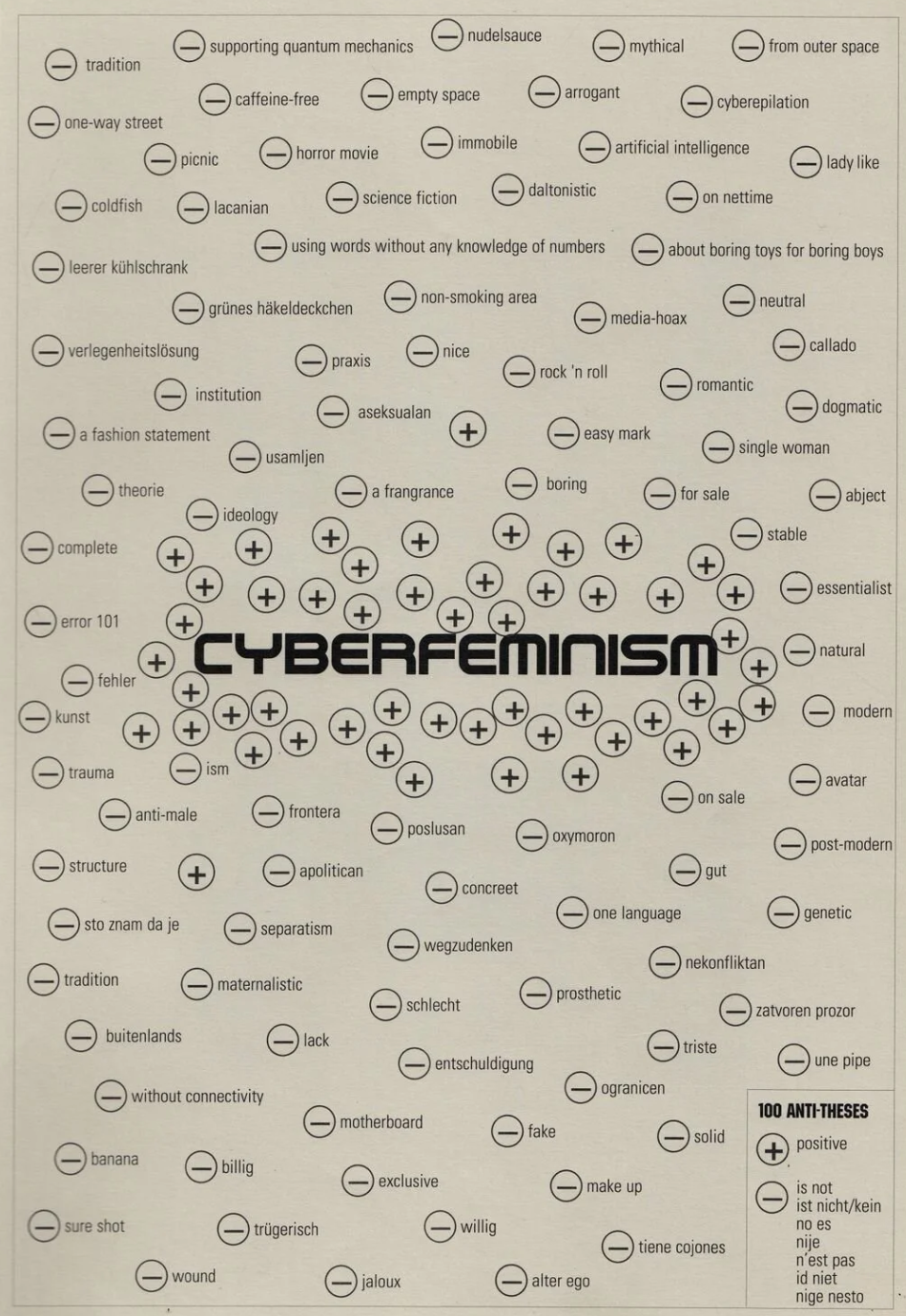
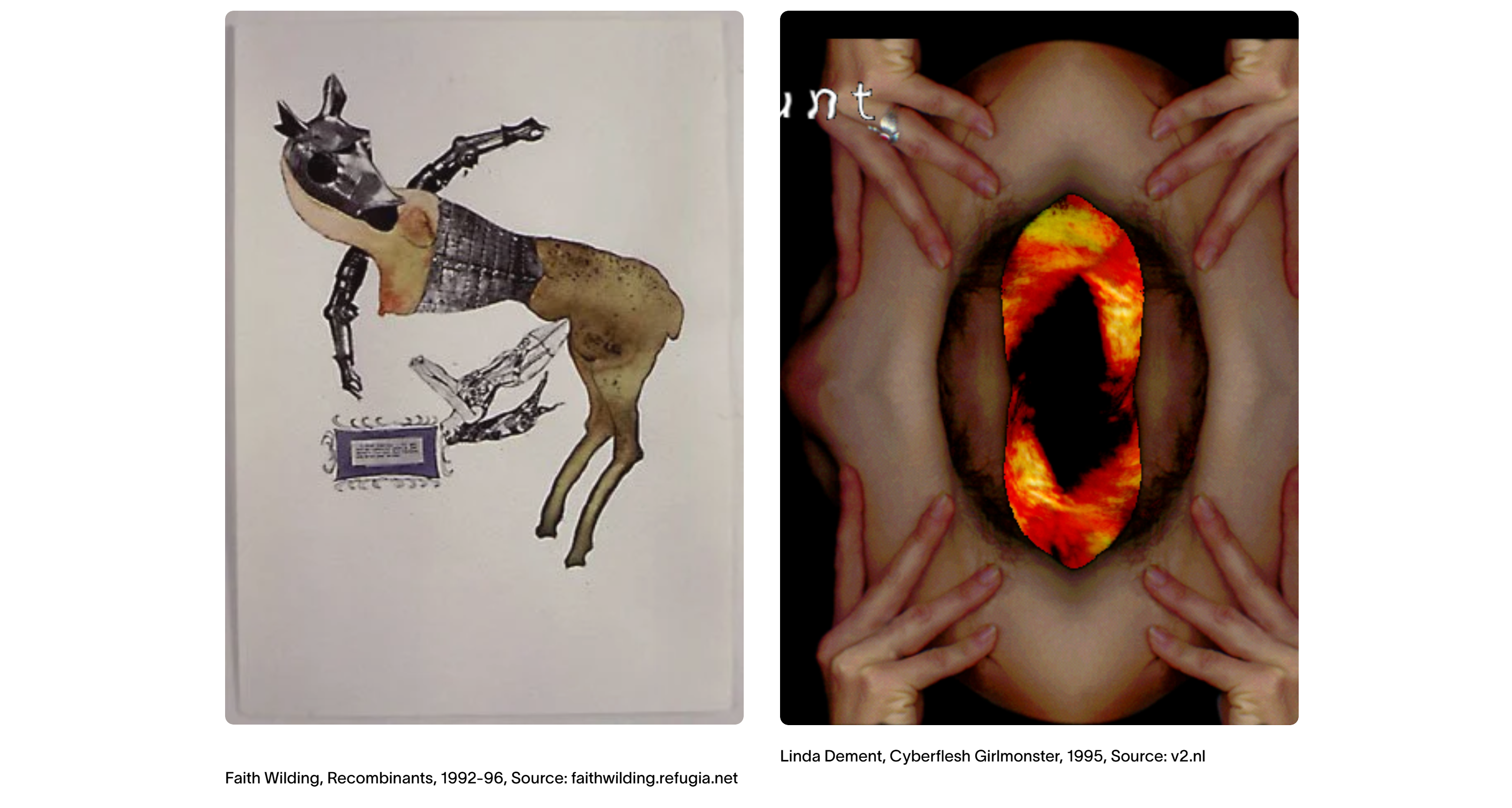
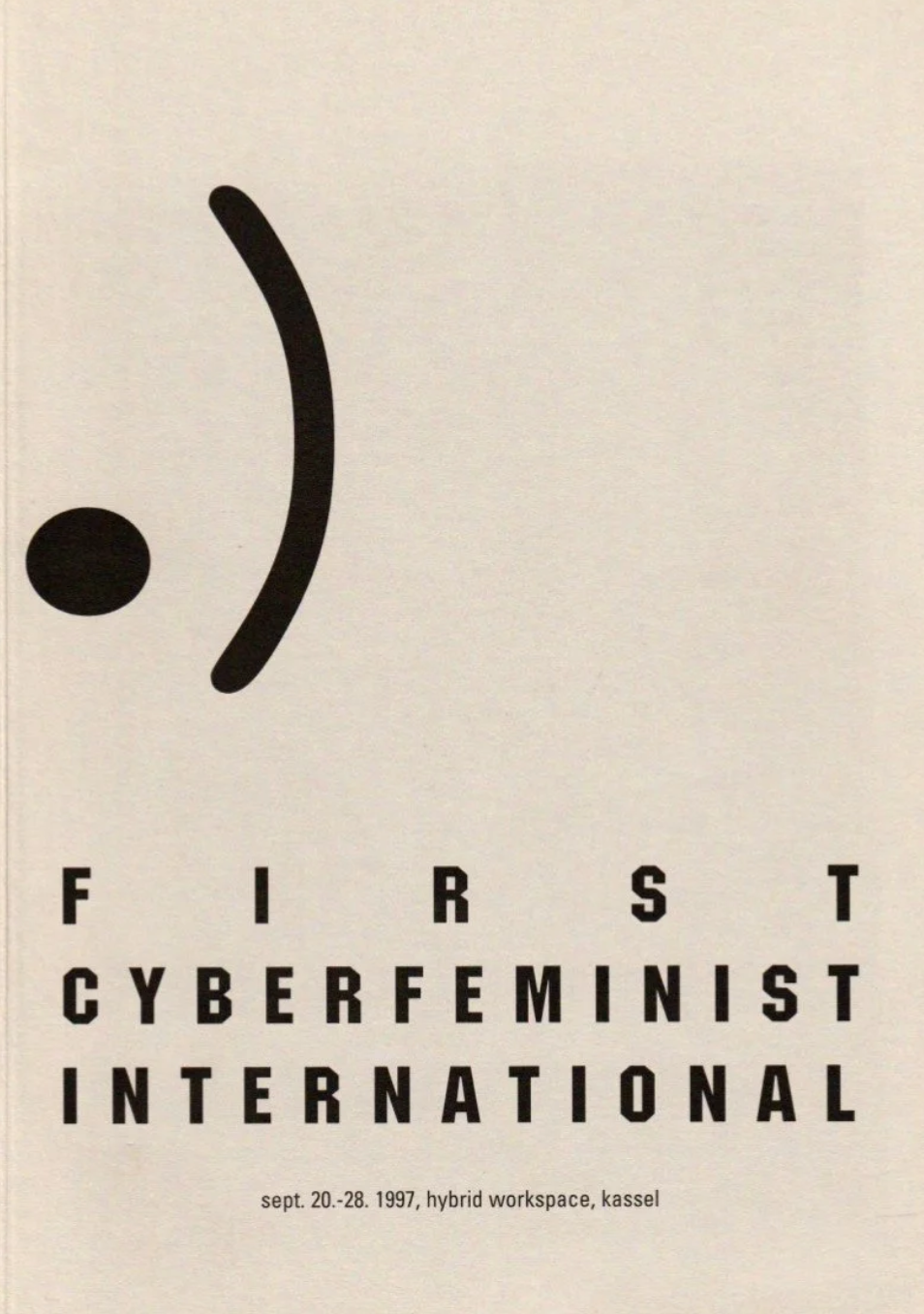
The Old Boys Network was a Berlin-based cyberfeminist collective founded in 1997. The group was made up of women and nonbinary artists, theorists, and activists. They organized events, workshops, and projects to explore how technology, gender, and digital culture intersect. The network aimed to challenge the male-dominated tech world and create alternative spaces for collaboration, creativity, and feminist action online.
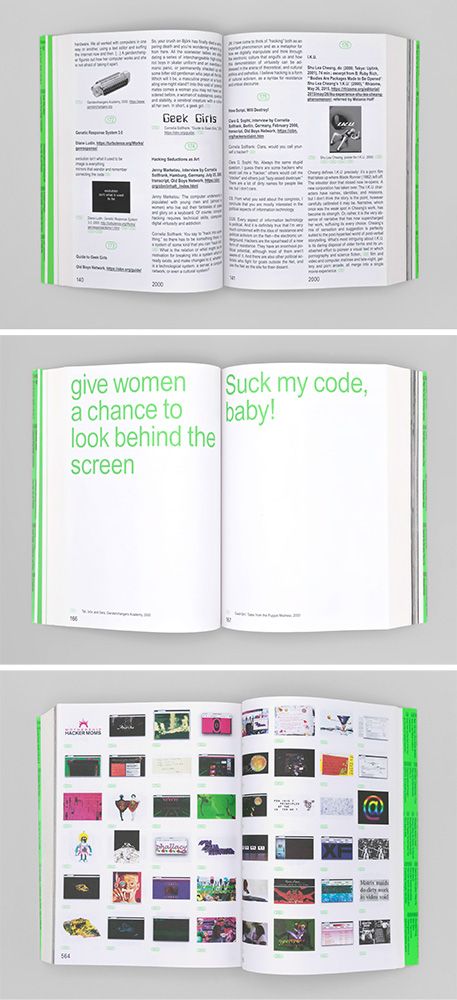
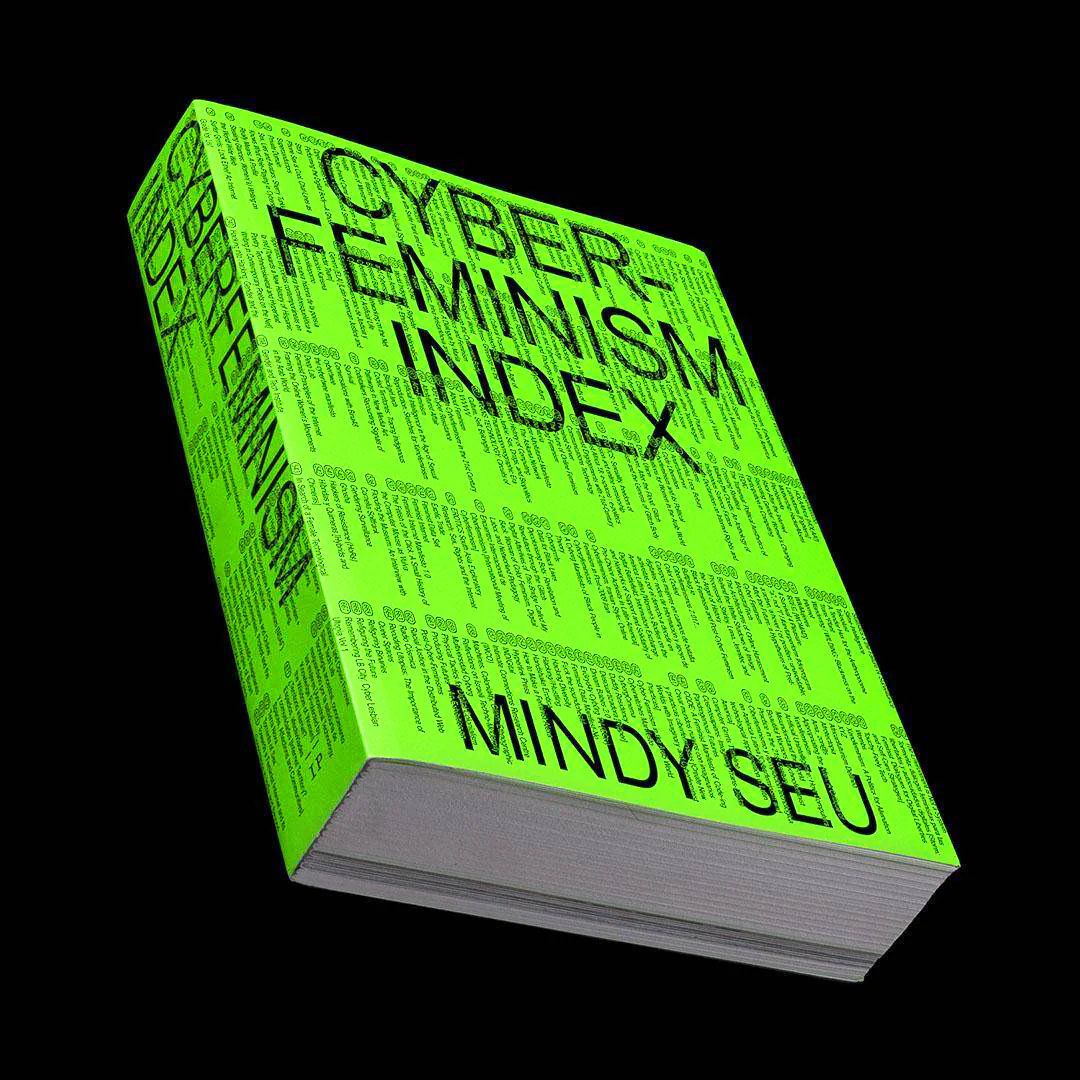
The Cyberfeminism Index (2023), edited by Mindy Seu, is a collection of works that show how feminist ideas and digital technology intersect. It began as a website for collecting examples of cyberfeminist art, activism, and theory. The index gathers websites, manifestos, and projects from the 1990s to today, highlighting the contributions of women, queer, and marginalized communities in shaping digital culture. It acts as an archive, showing the many ways cyberfeminism has influenced technology, art, and activism over time.

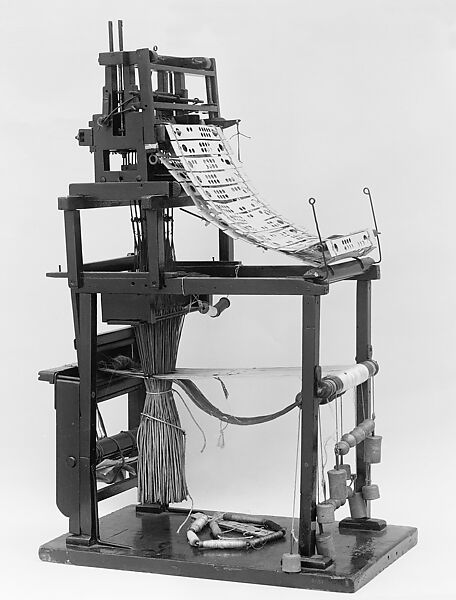
JACQUARD LOOM
1804-1805

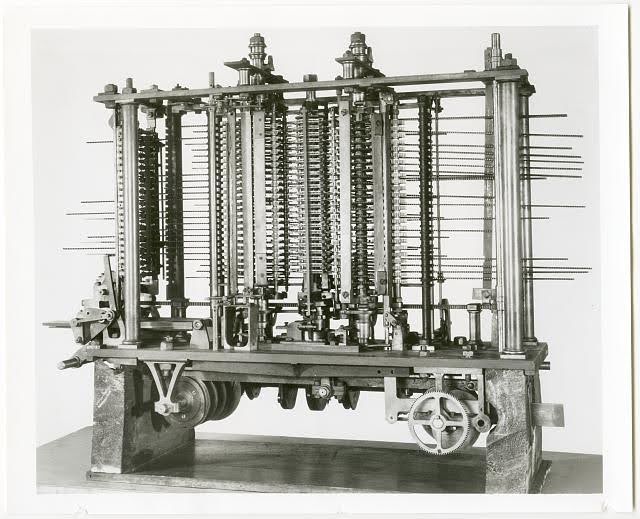
ANALITICAL ENGINE
1837
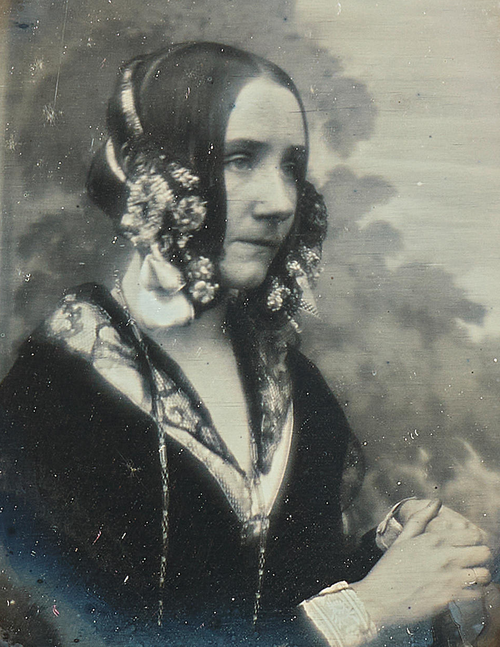
Ada LOVelaCe
1815-1852

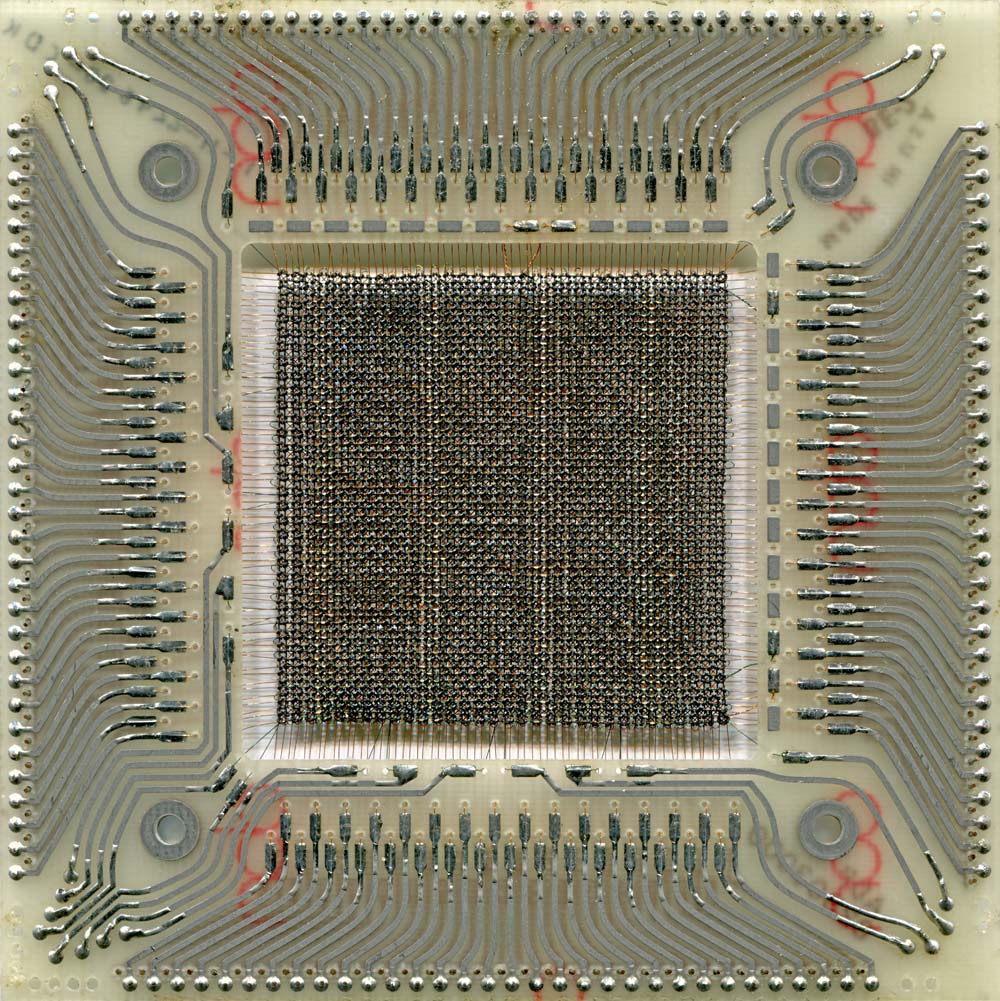
CORE ROPE MEMORY
1960
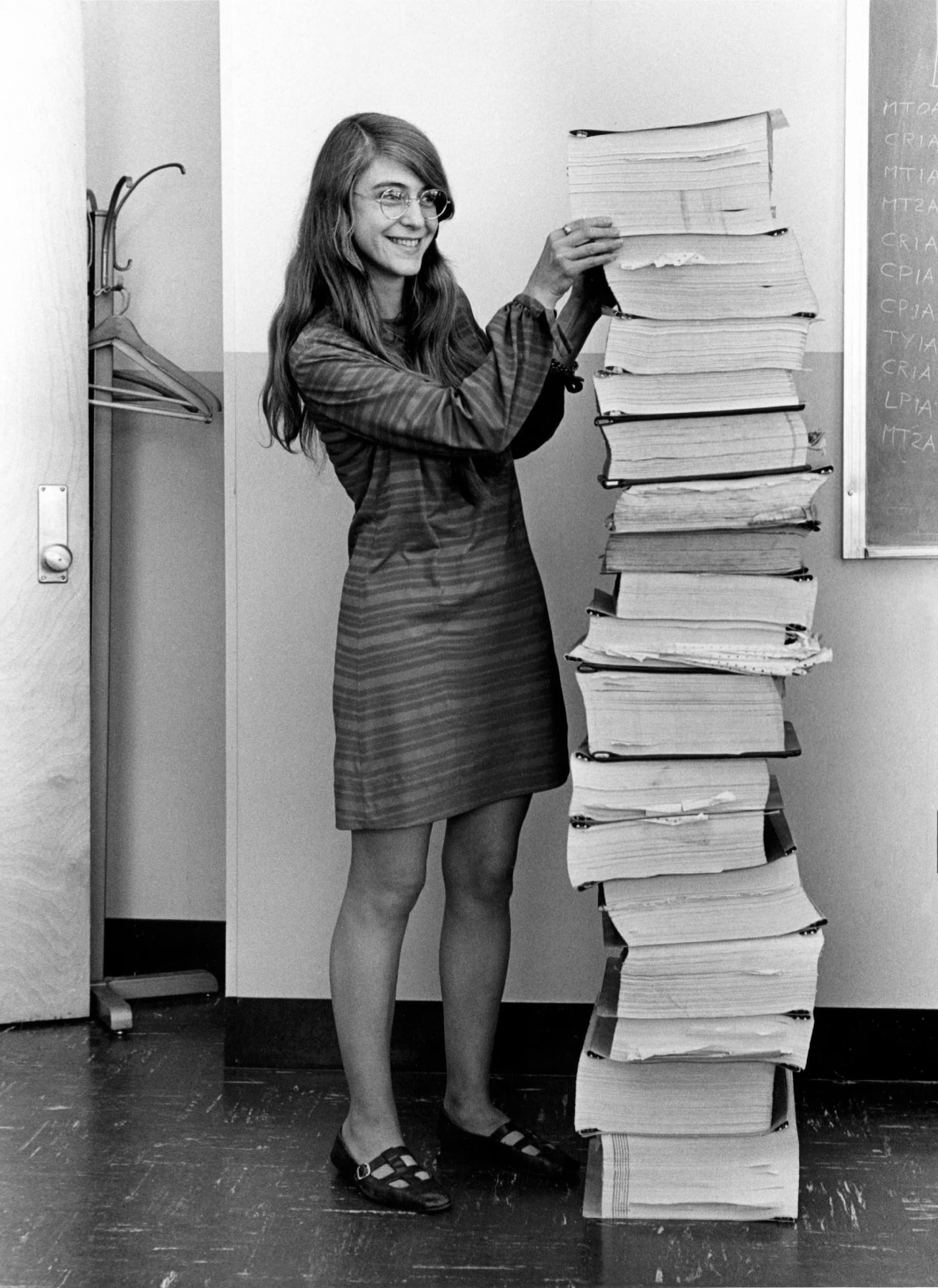
MARGARET HAMILTON
1936-
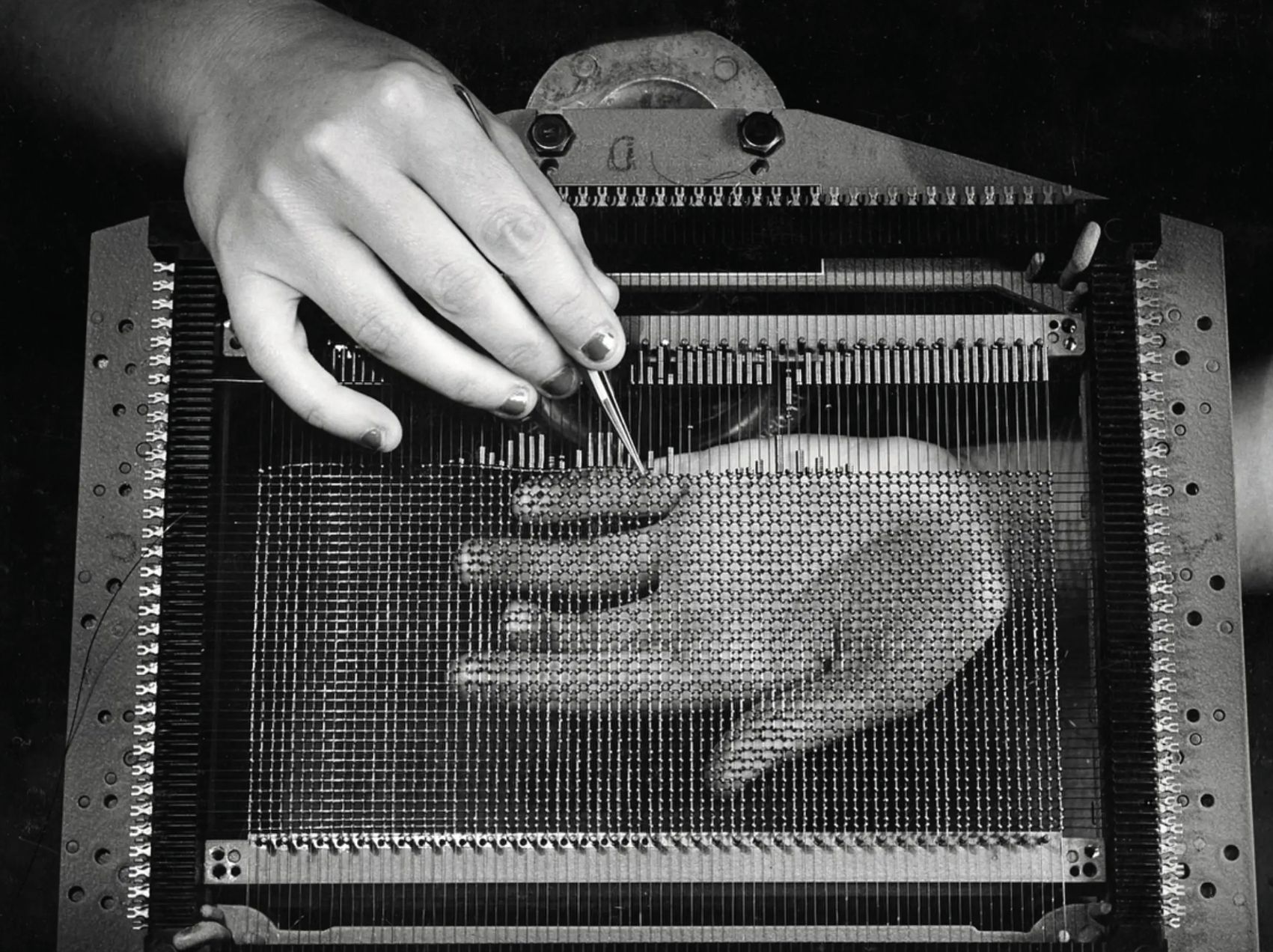
LITTLE OLD LADIES
1961-1972
A CYBORG MANIFESTO
1985
A CyberfeminiST ManifeSTo for the 21ST CenTUry
1991
OLD BOYS NETWORK
1991
CYBERFEMINISM INDEX
2023